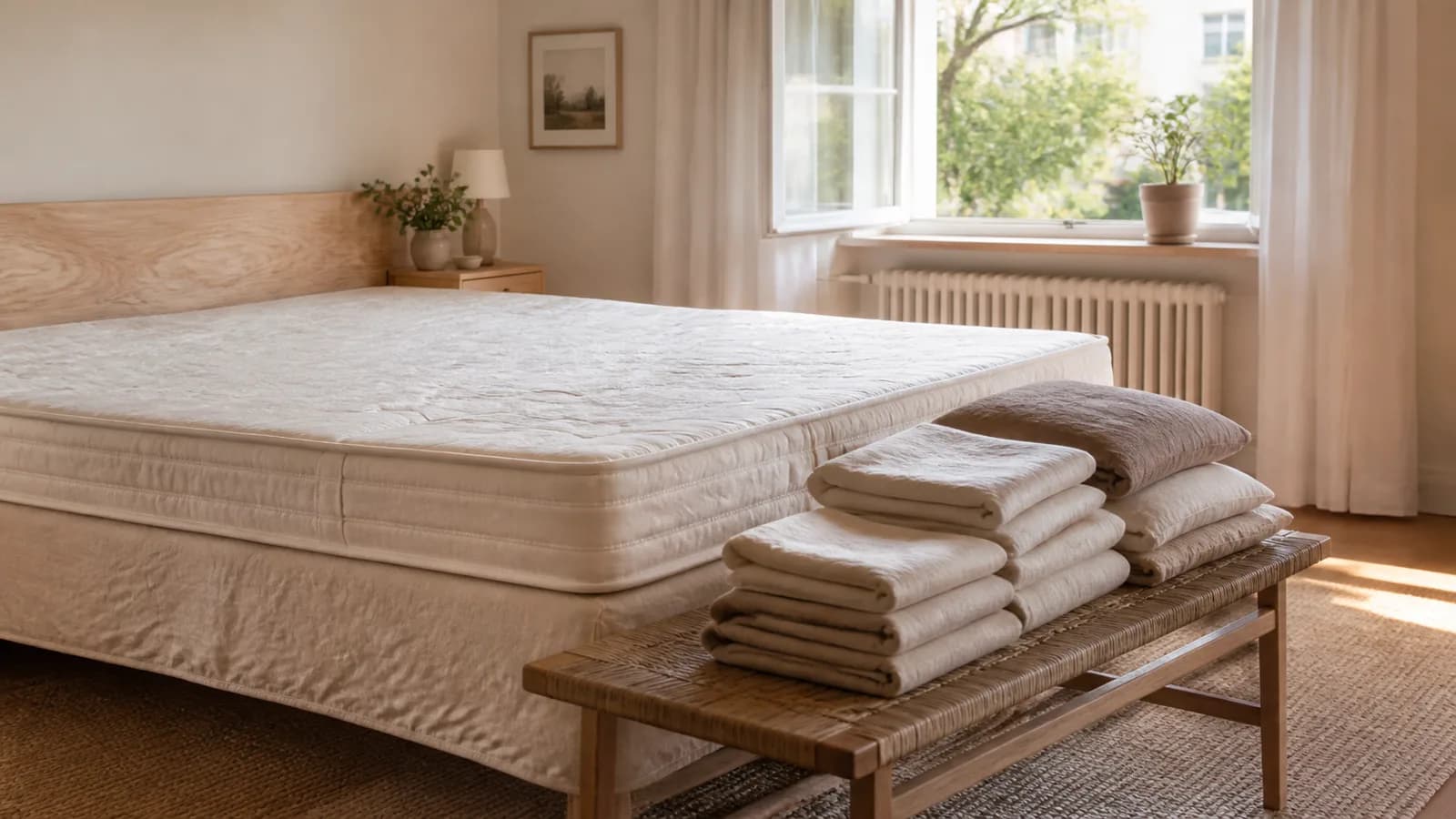
When choosing a bed, you'll often be weighing up two options: an integrated mattress topper (stitched into the mattress) or a separate/external mattress topper (a separate layer placed on top).
In short: A separate mattress topper is far more practical for everyday use and more sustainable, as you can care for and replace each part separately.
What's the difference?
- Integrated mattress topper: The top comfort layer is built into the mattress and cannot be removed.
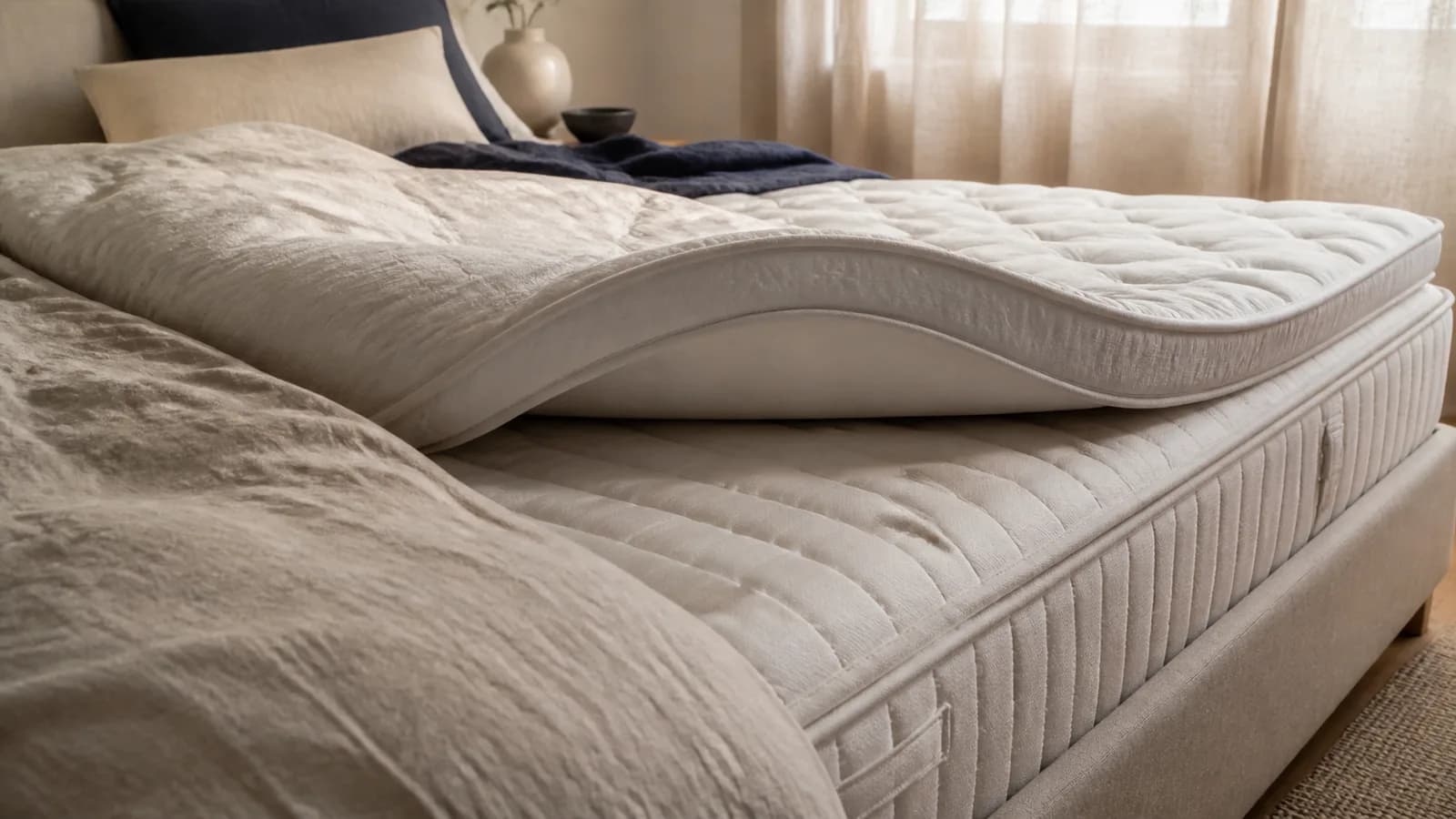
- Separate/external mattress topper: A standalone comfort layer placed on top of one or more mattresses.
Benefits of a separate mattress topper, especially for co-sleeping
Practical for everyday life
- Removable, washable cover, essential for young children's accidents, spills and allergy-related hygiene.
- Easy to replace as your comfort needs change, whether due to pregnancy, weight changes, the season or temperature.
- Rotate or replace the mattress topper alone to help extend the life of your mattresses.
A better co-sleeping experience
- One large mattress topper evens out the joins between multiple mattresses, creating a single, continuous sleeping surface.
- Option to choose a different core or thickness later without replacing the whole bed.
- Reduces motion transfer across the bed and can improve pressure relief for the whole family.
More sustainable
- Modular: Replace only the worn part instead of discarding the entire mattress.
- Less material waste and typically a lower carbon footprint over time, as you only need to replace the mattress topper.
- Easier to repair or reuse, for example by replacing just the cover or foam core.
Drawbacks of an integrated mattress topper
- Locked-in comfort: Once the top layer wears out, the whole mattress often needs replacing.
- Harder to clean after accidents, as the cover usually cannot be fully removed and washed separately.
- Less flexibility if your needs change, including firmness, materials or temperature.
When might an integrated option make sense?
- If you are buying a standard size and know you will not want to change the comfort, firmness or materials later.
- If you prefer the look of a bed without a separate mattress topper.
Choosing the right mattress topper for co-sleeping or a family bed
- One large mattress topper (typically 5–8 cm) works best on firm bed bases and creates the most seamless sleeping surface.
- Materials:
- Latex: Firmer support, good ventilation and excellent shape retention.
- Memory foam/visco foam: A more enveloping feel, though not recommended for co-sleeping.
- Standard foam (polyether foam/PE): A more affordable alternative to latex. It often retains less heat than memory foam but must be firm enough to ensure durability.
- Cover: Choose a removable, washable cover, ideally with a zip all the way around.
Conclusion
For co-sleeping, a separate mattress topper is the most practical choice for everyday use and the most sustainable in the long term. It gives you one large, even sleeping surface without joins, makes cleaning and maintenance easier, and lets you upgrade the comfort without replacing the entire bed.


 Co-sleeping: discussion, tips, tricks and guides