Prices are shown in EUR including VAT. Select your delivery country at checkout to see the final currency, VAT and total.

THE FAMBED® CO-SLEEPING BLOG

Explore inspiring articles and posts on co-sleeping, alongside general advice on getting the best possible sleep, from a child's earliest days through parenthood.

Co-sleeping means parents and children sleeping in the same bed or in the same room. Here, you'll find evidence-based answers about safety, sleep, space, choosing a bed and the practicalities of your family's nights.

Everything you need to know about co-sleeping: advice, safety and family life

Co-sleeping is not a one-size-fits-all solution for every family or every stage. The right choice depends on factors including your child's development, your family's sleep patterns, the sleeping space itself and the layout of the room. Explore the topics that reflect the questions most relevant to your family right now.

What is co-sleeping, and how do you get started?

Co-sleeping can mean sharing the same sleeping surface or sleeping in the same room. A good starting point is to consider what your nights are actually like, then adapt your setup as your needs, movement and routines change.

    Co-sleeping and bed-sharing safety

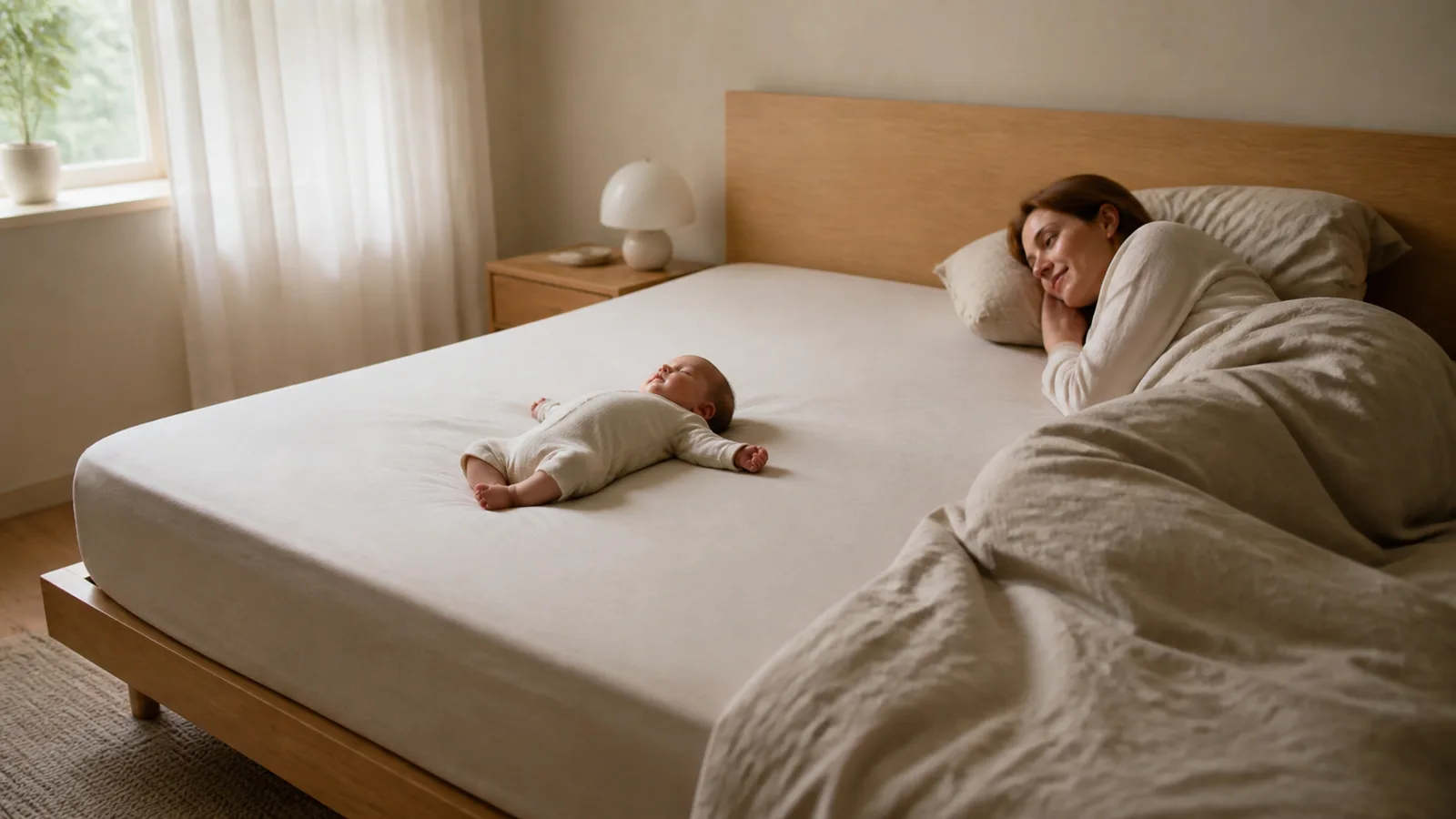
    Co-sleeping is not risk-free, and safety depends on your child's age and development, the sleeping surface and the specific setup. Key considerations include a firm, flat and continuous sleeping surface, sufficient space, and no unwanted gaps or loose items. The FamBed family bed is not a certified sleep product for infants.

      Sleep, closeness and wellbeing

      For some families, co-sleeping may be linked to more restful sleep, easier night-time care and a closer emotional connection. Our research articles explore possible links with sleep, breastfeeding and mental wellbeing, but do not suggest that every family will experience the same results.

        When your family's needs change

        There is no set age when co-sleeping should begin or end. Consider your family's current needs, the recurring signals from your child and how well everyone is sleeping. Try small, reversible changes rather than making a sudden switch. With clear communication and flexibility, you can still prioritise intimacy and time together as a couple.

          How to choose the right family bed

          The right family bed should suit both the people sleeping in it and the way you use your bedroom. Before choosing a width or setup, consider how many people will share the bed, how much they move at night, access around the room, wardrobes and any future needs.

            Comfort, sleep surface and care

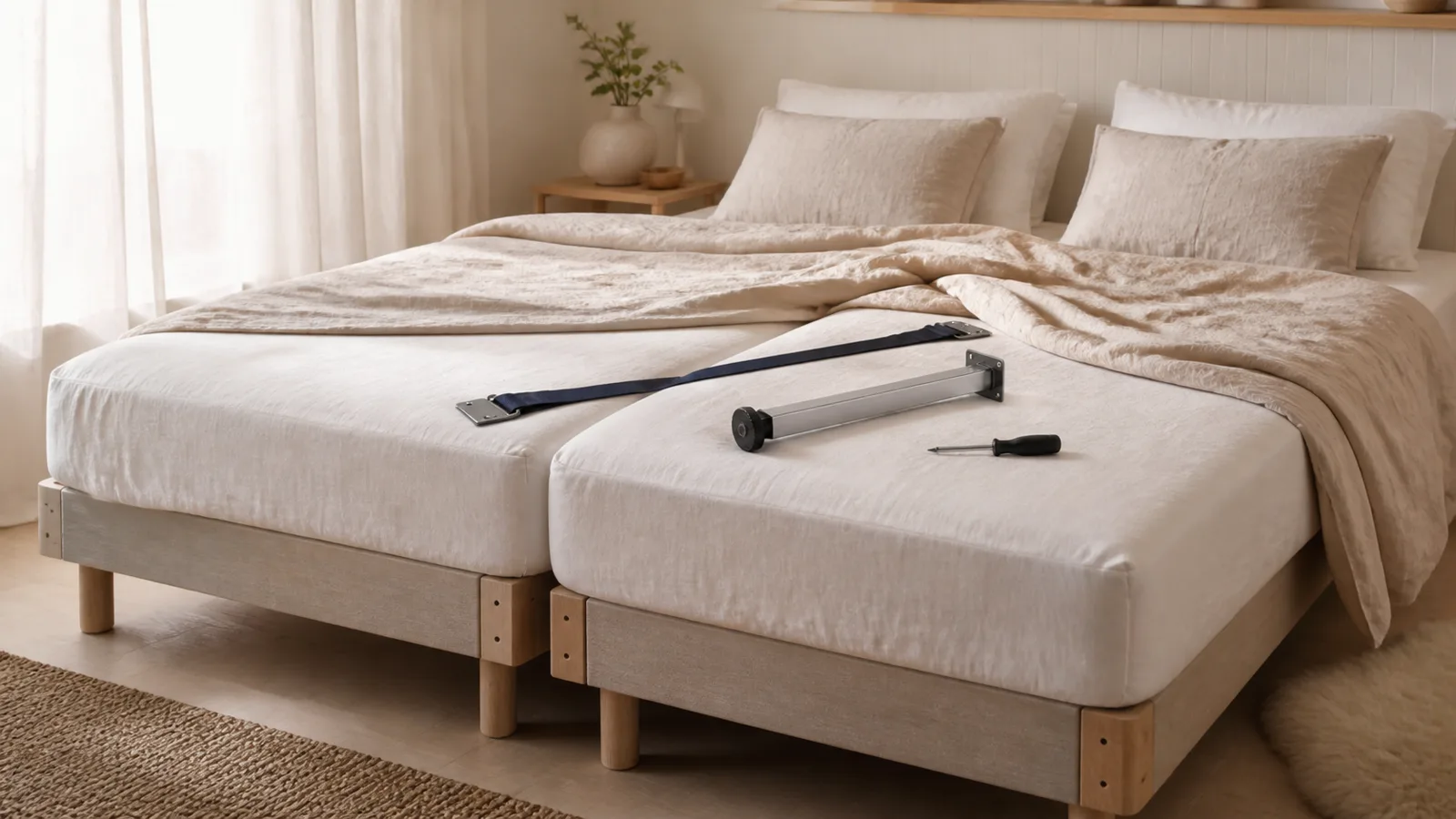
            Comfort preferences vary between adults, but a co-sleeping setup should also be assessed for firmness, stability and a continuous sleep surface. A full-width mattress topper can even out the joins, while removable, washable components make regular cleaning easier.

              Frequently asked questions about co-sleeping

              What does co-sleeping mean?

              Co-sleeping means that parents and children sleep close to one another, either on the same sleep surface or in the same room. Bed-sharing is the form of co-sleeping where the child and adults share the bed itself.

              How can we make bed-sharing safer?

              Reduce the risks by using a firm, flat sleep surface with plenty of space and no unwanted gaps, loose pillows or heavy duvets around the child. Avoid bed-sharing after smoking, drinking alcohol or taking drugs. Always follow official safer sleep guidance and assess your particular sleeping arrangement.

              Is the FamBed family bed certified for infants?

              No. The FamBed family bed is not a certified sleep product for infants. EN 16890 and ASTM F2933 cover cot mattresses and similar products, not adult mattresses or full-size family mattresses. Internal testing should not be confused with official certification.

              Should we choose a bedside crib or a family bed?

              Choose a bedside crib if you need a separate, enclosed sleep space close to you. Consider a family bed if lack of space is an ongoing issue or you need a longer-term solution. For many families, the two options suit different stages rather than being direct alternatives.

              How wide should a family bed be?

              There is no single right width for every family. Choose based on how many people will use the bed, how they move and sleep, and how much space is actually available in the room. FamBed family beds are available in widths from 200 to 360 cm, but the largest possible bed is not necessarily the most practical.

              Can co-sleeping help children sleep through the night?

              Yes, co-sleeping can help some children sleep more peacefully and for longer stretches. The existing research article discusses fewer night wakings and longer periods of settled sleep, but co-sleeping is no guarantee. What matters is how well your family actually sleeps.

              Does co-sleeping make children less independent?

              No, the existing research review does not suggest this. Instead, it describes possible links with emotional regulation, closeness and independence. However, it also stresses that the findings are influenced by factors including family circumstances, cultural practices and parental wellbeing.

              When is a child ready for their own bed?

              There is no set age when every child is ready for their own bed. Look for recurring curiosity, a desire for more space and an interest in having their own place to sleep. A gentle transition can begin with short trials and familiar routines, while giving your child the option to get help or come back.

              Co-sleeping news, tips, tricks and guides 💌

              Sign up for a series of emails packed with valuable guides and practical tips and tricks for better co-sleeping and better sleep overall for babies, toddlers and parents.