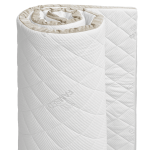
When choosing a bed you often face two solutions: an integrated topper (sewn into the mattress) or a separate/external topper (a standalone layer placed on top).
Short version: A separate topper is far more practical in everyday life—and more sustainable—because you can maintain and replace the parts individually.
What is the difference?
- Integrated topper: The comfort layer is part of the mattress and cannot be removed.
- Separate/external topper: An independent comfort layer placed on top of one or more mattresses.
Advantages of a separate topper (especially for co-sleeping)
Practical in everyday life
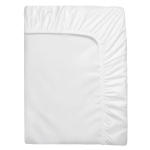
- Removable, washable cover – indispensable for small children’s “accidents”, spills and allergy hygiene.
- Easy to replace if comfort needs change (pregnancy, weight changes, season/temperature).
- You can rotate or replace only the topper, which extends the lifespan of the mattresses.
Better co-sleeping experience
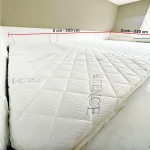
- One large topper smooths out the seams between multiple mattresses and provides a large, continuous sleeping surface.
- Option to choose a different core/thickness later without replacing the entire bed.
- Dampens movement across the bed and can improve pressure relief for the whole family.
More sustainable
- Modular: Replace only what is worn – instead of discarding the entire mattress.
- Less material waste and typically a lower carbon footprint over time, because you only need to renew the topper.
- Easier to repair/reuse (e.g. just a new cover or a new foam core).
Disadvantages of an integrated topper
- Locked-in comfort: When the top layer is used/worn, the entire mattress often needs to be replaced.
- More difficult cleaning after accidents, as the cover typically cannot be fully removed and washed separately.
- Less flexibility if needs change (firmness, materials, temperature).
When can an integrated solution make sense?
- If you are buying a standard size and know that you will not want to change comfort, firmness or materials in the future.
- If you prioritise a look without a separate topper.
Choosing the right topper for co-sleeping / a family bed
- One large topper (typically 5–8 cm) is best for firm bed bases and provides the most continuous surface.
- Materials:
- Latex: Firmer support, good ventilation, holds its shape well.
- Memory/visco: More “enveloping” comfort (however, not recommended for co-sleeping).
- “Regular foam” (polyether foam/PE): Cheaper alternative to latex; often better than memory foam regarding heat, but requires a firm comfort level for durability.
- Cover: Ensure a removable, washable cover (preferably with a zip all the way round).
Conclusion
For co-sleeping, a separate/external topper is the most practical choice in daily life—and the most sustainable in the long run. You get a large, even sleeping surface without seams, can wash and maintain it more easily, and you can upgrade the comfort without replacing the entire bed.