Advising against co-sleeping is without evidence
Co-sleeping is a practice used by many families worldwide, and it is often an important part of parenting. However, in Denmark, the Danish Health Authority has for several years recommended against co-sleeping as a prevention measure for sudden infant death syndrome (SIDS). This recommendation has, however, proven to be based on questionable evidence, and the Danish Health Authority has also in their revised versions of their recommendations adjusted to more lenient guidelines for co-sleeping and no longer directly advises against co-sleeping and bed-sharing, provided it takes place under proper conditions.
Lack of Scientific Foundation
An article from the Danish Midwives’ Association examines the evidence underlying the Danish Health Authority’s recommendations on co-sleeping. Authors Katrine Christiansen and Camilla Tornbo have reviewed the sources used by the Danish Health Authority and found them inadequate. Of the four main sources, half find no increased risk of SIDS from co-sleeping if the parents are non-smokers. Despite this, the sources showing a potential risk are given greater weight (Jordemoderforeningen).
The Benefits of Co-Sleeping
Improved Sleep Quality and Attachment
Co-sleeping can improve sleep quality for both the child and the parents. The close contact can reduce stress and promote a sense of security in the child. Research shows that co-sleeping can strengthen the attachment between parents and child, which is crucial for the child’s development (Jordemoderforeningen).
Breastfeeding
Co-sleeping makes night-time breastfeeding easier and can increase breastfeeding frequency. Frequent breastfeeding is beneficial for both mother and child, as it can promote a stronger breastfeeding practice and strengthen the bond between mother and child (Jordemoderforeningen).
International Perspectives
Several international studies support co-sleeping under safe conditions. For example, a study from the “Journal of Developmental & Behavioral Pediatrics” shows that co-sleeping can improve sleep patterns and promote breastfeeding. These findings emphasise that with the right safety precautions, co-sleeping can be both beneficial and safe (Jordemoderforeningen).
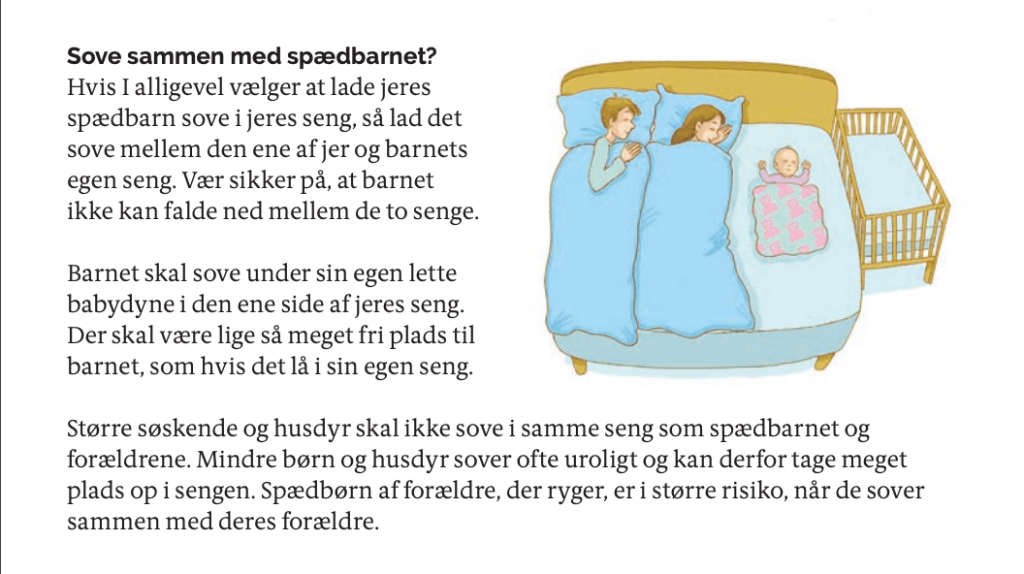
Safe Co-Sleeping
To ensure co-sleeping is practised safely, it is important to follow some basic guidelines:
- The child should always lie on its back.
- The bed should have a firm mattress without pillows, heavy blankets or other objects that may pose a suffocation risk.
- Parents should avoid co-sleeping if they are under the influence of alcohol, drugs or are extremely tired.
Conclusion
Although some health authorities advise against co-sleeping due to potential risks, recent studies show that co-sleeping can be both safe and beneficial when practised under the right conditions. It is therefore important to consider both the benefits and risks of co-sleeping and make informed choices based on the latest research and individual preferences.
For more details and a deeper understanding of the evidence behind co-sleeping, you can read the article from the Danish Midwives’ Association here.
With a bed from FamBed, it is easier to follow the guidelines for safe co-sleeping than in a regular bed, as there is more space for those sleeping, and a uniform sleeping surface without gaps is ensured.